

Views: 0 Author: Site Editor Publish Time: 2025-10-29 Origin: Site
Choosing the right equipment is a critical decision for any food service business. The efficiency, quality, and consistency of your dishes often depend on the powerhouse of your kitchen: the oven. A high-quality convection commercial oven can transform your cooking process, delivering superior results faster than conventional models. This comprehensive guide will explore the capabilities of a convection commercial oven, compare it to other essential kitchen equipment like the commercial steam oven, and explain why it's a necessary investment for your culinary success.
We will cover the specific uses of a convection commercial oven, its key benefits, and how it stands out from alternatives such as the commercial conveyor toaster. By understanding this equipment, you can make an informed decision that boosts your kitchen's productivity and the quality of your food.
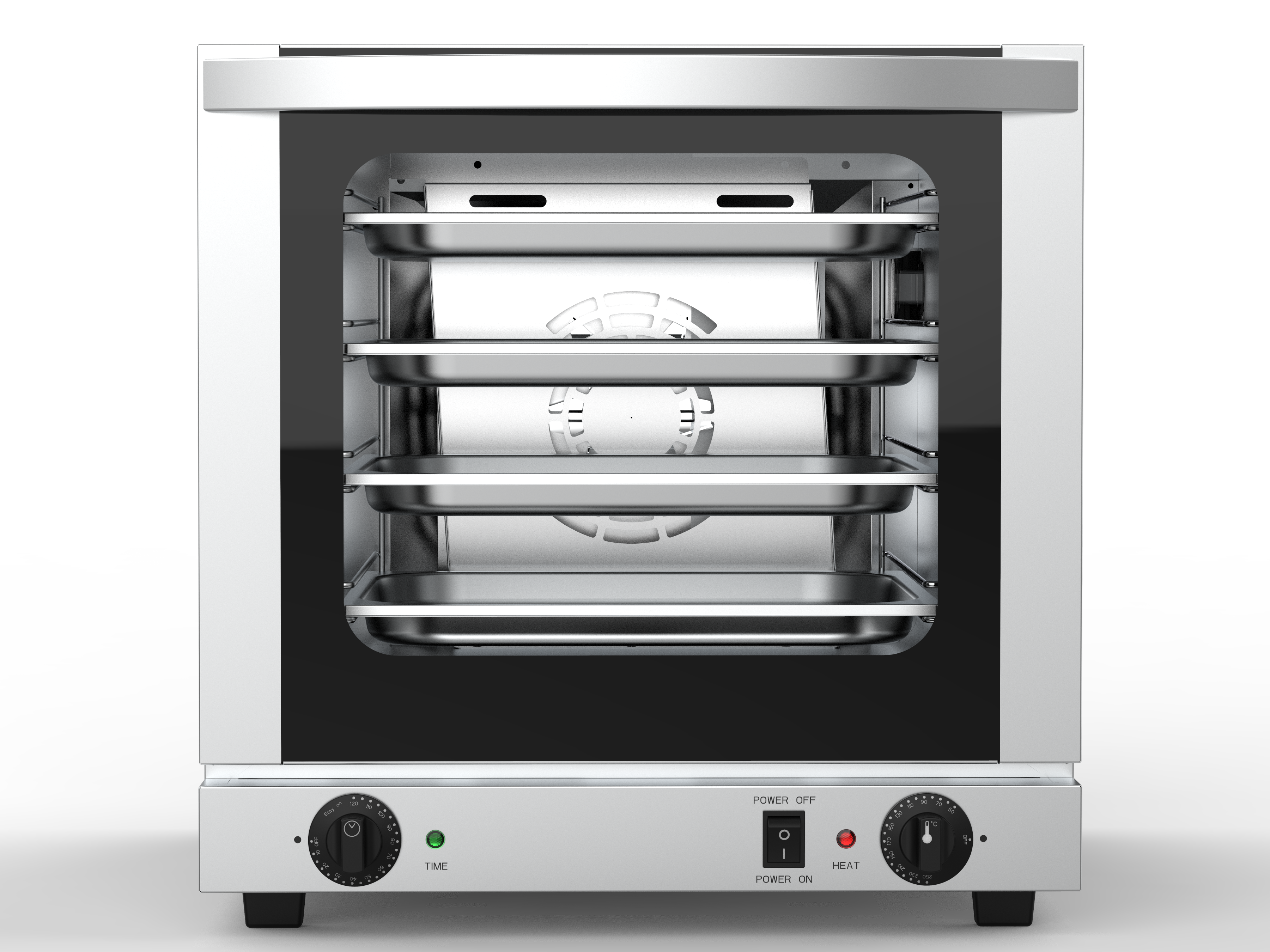
A convection commercial oven, sometimes called a professional fan oven, is a versatile workhorse designed for high-volume, professional kitchens. Its primary distinction is a built-in fan and exhaust system that circulates hot air throughout the oven cavity. This process eliminates hot spots and creates a consistent cooking environment, making it ideal for a wide range of applications.
These ovens excel at tasks requiring even, dry heat. They are commonly used for:
Baking: Cookies, cakes, pastries, and breads bake evenly and develop a perfect golden-brown crust. The circulating air helps baked goods rise higher and more uniformly. Roasting: Meats like chicken, turkey, and beef roast faster while retaining their juices, resulting in a moist interior and a crispy exterior.
Grilling and Browning: The intense, even heat is perfect for finishing dishes, browning casseroles, or grilling vegetables.
Dehydrating: You can use the low, consistent heat to dehydrate fruits, vegetables, and meats for preservation.
Reheating: Large batches of food can be brought to serving temperature quickly and evenly without drying out.
The efficiency of a convection commercial oven allows chefs to cook at lower temperatures for shorter durations, saving both time and energy. This makes it an invaluable asset in busy restaurants, bakeries, and catering operations.
Investing in a top-tier convection commercial oven brings numerous advantages to a professional kitchen. The technology is specifically engineered to meet the demands of a commercial environment, offering benefits that directly impact your bottom line and product quality.
The fan's hot air circulation technology is the star of the show. It transfers heat more efficiently to the food's surface, accelerating the cooking process by as much as 25% compared to conventional ovens. This speed is crucial during peak service hours, allowing you to increase table turnover and serve more customers. While a commercial steam oven is excellent for delicate items, a convection commercial oven is the champion of speed for roasting and baking.
Say goodbye to rotating pans halfway through baking. A convection commercial oven eliminates hot and cold spots, ensuring that every item on every rack cooks at the same rate. Whether you're baking a full sheet of cookies or roasting multiple chickens, you can trust that the results will be uniform every time. This consistency is a hallmark of professionalism and customer satisfaction.
The dry, hot environment created by a convection commercial oven is perfect for achieving the Maillard reaction, the chemical process that gives browned food its distinctive flavor. Meats develop a beautifully crisp skin, roasted vegetables caramelize perfectly, and pastries achieve a desirable golden hue. While a commercial conveyor toaster is specialized for bread, a convection oven offers greater browning versatility.
Because a convection commercial oven cooks food faster, it naturally uses less energy. Furthermore, you can often set the temperature about 25°F (around 15°C) lower than you would in a conventional oven without sacrificing performance. Over time, these energy savings add up, reducing your utility bills and lowering your kitchen's operational costs.
To fully appreciate the role of a convection commercial oven, it’s helpful to compare it to other popular types of commercial cooking equipment.
A commercial steam oven is another essential piece of equipment, but it serves a different purpose. A commercial steam oven injects moisture into the cooking chamber, creating a humid environment. This is ideal for:
Steaming vegetables and seafood. Baking artisanal breads with a thick, crispy crust. Gently reheating delicate dishes without drying them out.
While a commercial steam oven excels at preserving moisture, it doesn't provide the dry heat needed for roasting or achieving a crispy finish. Many high-end kitchens use both a convection commercial oven and a commercial steam oven to cover all their cooking needs. The synergy between a commercial steam oven and a convection oven gives a kitchen ultimate flexibility.

A commercial conveyor toaster is a highly specialized piece of equipment. As the name suggests, a commercial conveyor toaster uses a conveyor belt to move bread, bagels, or buns through a heated chamber. It is designed for one primary task: toasting large quantities of items quickly and consistently.
You would choose a commercial conveyor toaster for a high-volume breakfast service or a sandwich shop. However, its functionality is limited. A convection commercial oven can also toast and brown items, but it offers far greater versatility for baking, roasting, and more. A commercial conveyor toaster cannot replace the broad utility of a convection oven. While both are important, the commercial conveyor toaster is for a specific niche, unlike the multi-purpose convection commercial oven. Understanding the difference between a commercial conveyor toaster and a convection commercial oven is key to outfitting your kitchen properly.
Feature | Convection Commercial Oven | Commercial Steam Oven | Commercial Conveyor Toaster |
|---|---|---|---|
Primary Function | Baking, Roasting, Browning | Steaming, Baking with Moisture | High-Volume Toasting |
Heat Type | Dry, Circulating Air | Moist, Humid Heat | Radiant Heat |
Best For | Meats, Pastries, Casseroles | Vegetables, Fish, Breads | Bread, Bagels, Buns |
Versatility | High | Medium | Low |
This table illustrates how a convection commercial oven serves as a central, multi-functional unit, while a commercial steam oven and a commercial conveyor toaster fill specialized roles.
When selecting a convection commercial oven, consider factors like size, power source (gas or electric), and special features. For unmatched reliability and performance, we recommend equipment from chinaking power. Their dedication to quality engineering ensures you get a durable, efficient, and powerful oven that will serve your business for years to come. chinaking power understands the demands of a professional kitchen and builds machines that deliver consistent, exceptional results. Their product line includes top-tier models of the convection commercial oven, commercial steam oven, and even the commercial conveyor toaster.
For more information on chinaking power products and to find the perfect solution for your kitchen, please reach out.

Email: evelyn@chinakingstar.com
Phone: +86-750-2761363
A: Yes, but with caution. You may need to use a lower temperature and create a water bath (bain-marie) to protect the custard from the intense, dry heat. For such items, a commercial steam oven is often a better choice.
A: Generally, you should reduce the cooking temperature by about 25°F (15°C) and check for doneness about 10-15% earlier than the recipe suggests. Every convection commercial oven is slightly different, so it's wise to perform a few test runs.
A: Both have their merits. Gas ovens often heat up faster and provide moist heat, while electric models tend to offer more precise temperature control and even heat distribution. The best choice depends on your kitchen's utility hookups and your personal preference. chinaking power offers excellent options in both categories.
A: A commercial conveyor toaster is built for volume. It can toast hundreds of slices per hour with consistent results, making it essential for businesses like hotels and busy cafes. A standard pop-up toaster cannot handle this level of demand.
If you want to learn more, click on the article below:
Premium Conveyor Toasters by Chinaking Power
Reliable Electric Convection Ovens for Your Kitchen
Choosing The Right Commercial Bread Oven
