

Views: 0 Author: Site Editor Publish Time: 2026-03-02 Origin: Site
Have you ever wondered what makes food in restaurants so perfectly browned, crisp, and evenly cooked? The secret often lies not just in the chef's skill, but in their equipment. A key piece of that puzzle is the convection oven. This versatile appliance is a powerhouse in both home and professional kitchens, but what exactly is it? This guide will explore everything you need to know about the convection oven, from how it works to why it might be the perfect addition to your culinary toolkit. We will cover its benefits, its differences from conventional ovens, and its specific uses, especially as a convection oven for baking.
A [convection oven]( is an oven that uses a fan to circulate hot air around the food. This simple addition makes a world of difference compared to a conventional oven, which relies on radiant heat from heating elements. In a traditional oven, hot air is static, often creating hot spots and cool spots. This can lead to uneven cooking, where one side of your dish is burnt while the other is undercooked.
The fan in a convection oven solves this problem by creating a consistent, uniform temperature throughout the oven cavity. This circulating air speeds up the cooking process significantly, often by as much as 25%. The moving air also wicks away the layer of cooler air that surrounds the food's surface, allowing the heat to penetrate more quickly and efficiently. This mechanism is what gives a convection oven its reputation for faster, more even cooking. Whether it's a home unit or a heavy-duty commercial convection oven, the principle remains the same: moving air equals better cooking.


Understanding the key distinctions between a convection oven and a conventional oven can help you decide which is right for your needs. While both cook food with heat, their methods and results can vary significantly.
Feature | Convection Oven | Conventional Oven |
|---|---|---|
Heat Distribution | Uses a fan to circulate hot air for even heat. | Relies on radiant heat from stationary elements. |
Cooking Time | Cooks food up to 25% faster. | Slower cooking times. |
Temperature | Requires a lower temperature (about 25°F less). | Requires the standard recipe temperature. |
Browning & Crisping | Excellent browning and crisping due to dry, circulating air. | Can produce less consistent browning. |
Best For | Roasting, toasting, baking, dehydrating. | Delicate items like custards, soufflés, and quick breads. |
The primary advantage of a convection oven is its efficiency. The constant airflow ensures that there are no temperature fluctuations, making it a reliable tool for achieving consistent results. This is particularly beneficial in a commercial setting where a commercial convection oven must produce high-quality food quickly and reliably. For home cooks, using a convection oven for baking can transform their cakes, cookies, and pastries.
Baking is where a convection oven truly shines. If you're serious about your baked goods, a convection oven for baking can elevate your creations from good to great. The circulating air promotes better browning and creates a crispier crust, which is ideal for everything from bread to pies.
The dry, hot environment created by the fan in a convection oven is perfect for caramelization and the Maillard reaction, the chemical process responsible for the delicious browning on baked goods. This means your cookies will have crispier edges and your pie crusts will be flakier. When using a convection oven for baking, you can also bake multiple trays of cookies or pastries at once without needing to rotate them. The even heat distribution ensures that every item on every rack cooks uniformly. This is a massive time-saver and a game-changer for anyone who loves to bake in batches. A commercial convection oven is indispensable in bakeries for this very reason, allowing for high-volume, consistent production.
In a professional kitchen, efficiency, speed, and consistency are paramount. A commercial convection oven delivers on all three fronts, making it an essential piece of equipment for restaurants, bakeries, and catering businesses.
First, a commercial convection oven can handle a much larger volume of food than a standard oven. Its ability to cook multiple pans evenly at once maximizes kitchen output during busy service hours. Second, the faster cooking times allow chefs to turn tables more quickly and fulfill orders with greater speed. This improved efficiency translates directly to higher profits.
Furthermore, a commercial convection oven provides superior cooking results. Meats come out juicier with a perfectly roasted exterior, and vegetables are evenly cooked and beautifully caramelized. For businesses that rely on quality, the consistency offered by a commercial convection oven is invaluable. It ensures that every dish served meets the same high standard, building a reputation for excellence. Investing in a reliable commercial convection oven is one of the smartest decisions a food service operator can make.
Switching to a convection oven requires a few simple adjustments to your existing recipes. Because a convection oven cooks more efficiently, you will generally need to reduce either the cooking time or the temperature. A good rule of thumb is to lower the recipe's recommended temperature by 25°F (about 15°C). If you prefer to keep the temperature the same, you should check for doneness about two-thirds or three-quarters of the way through the original cooking time.
For example, if a recipe calls for baking at 350°F for 40 minutes, you could either cook it at 325°F for 40 minutes or at 350°F for about 30 minutes. It may take a little experimentation to find the perfect conversion for your specific convection oven, but these guidelines are a great starting point. Mastering these adjustments will unlock the full potential of your convection oven for baking and all other cooking tasks.
A convection oven is incredibly versatile, but it excels with certain types of foods. Anything that benefits from a crisp, golden-brown exterior is a perfect candidate. Roasted meats like chicken, turkey, and beef become wonderfully juicy on the inside with crispy skin on the outside. Roasted vegetables, such as potatoes, broccoli, and Brussels sprouts, caramelize beautifully.
This appliance is also an excellent convection oven for baking cookies, pies, and pastries, as it produces even browning and a delightful texture. It’s also great for toasting, dehydrating fruits, and reheating leftovers, making them taste freshly made instead of soggy. However, you may want to avoid using the convection setting for delicate items like soufflés, custards, and some delicate cakes, as the circulating air can cause them to set unevenly or collapse.
For any business looking to produce consistently high-quality roasted or baked goods, a commercial convection oven is the ideal solution. Its power and precision are unmatched. When choosing an appliance, consider a robust model like those from chinaking power, which are designed for durability and exceptional performance in demanding kitchen environments.
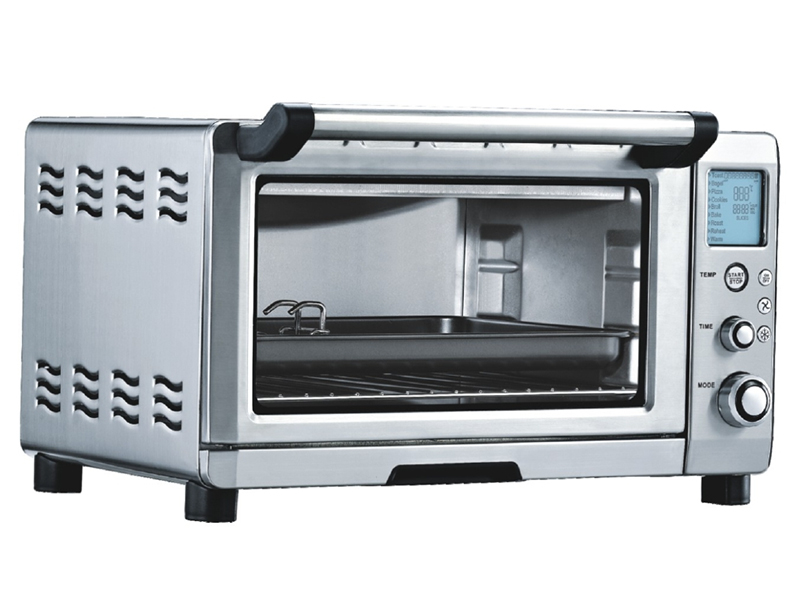
The main advantage is faster, more even cooking. The fan circulates hot air, eliminating hot spots and ensuring food cooks uniformly and about 25% more quickly than in a conventional oven. This makes the convection oven highly efficient.
Yes, you can use your regular bakeware. However, for best results, use pans with low sides, like cookie sheets or roasting pans. This allows the circulating air to reach the food more easily. Avoid using pans with very high sides, as they can block the airflow.
No. Most convection ovens have an option to turn the fan off, allowing them to function as a conventional oven. This is useful for delicate baked goods like custards or soufflés that might be negatively affected by the moving air.
Absolutely. A commercial convection oven can significantly increase a small cafe's efficiency and food quality. The ability to cook faster and bake multiple items at once allows for a greater variety of fresh menu items and quicker service, making it a valuable investment. Using a commercial convection oven for baking can set your cafe's pastries apart.
Cleaning a convection oven is similar to cleaning a conventional one. Many models come with a self-cleaning feature. For manual cleaning, use a non-abrasive cleaner and follow the manufacturer's instructions. Be sure to clean the fan area carefully to ensure it continues to operate efficiently.
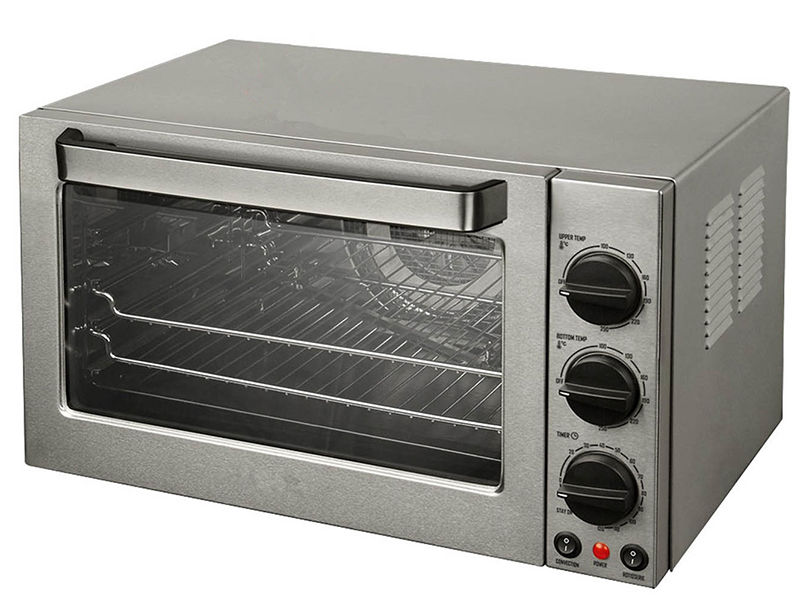
For inquiries about top-quality commercial kitchen equipment, including the chinaking power commercial convection oven, please reach out to us.
Email: evelyn@chinakingstar.com
Phone: +86-750-2761363
