

Views: 0 Author: Site Editor Publish Time: 2026-10-13 Origin: Site
Choosing kitchen equipment often comes down to one simple question: do you want food cooked with hot, circulating air, or with controlled moisture and heat? That question sits at the heart of the ongoing debate between convection and steam cooking technology, and it matters whether you're outfitting a professional kitchen or upgrading appliances at home.
Both oven types promise faster, more even cooking than a standard oven, but they achieve that goal through very different methods. One relies on a fan to push hot air around food, browning and crisping surfaces. The other uses steam to lock in moisture, keeping delicate ingredients tender while still cooking them thoroughly. Neither approach is universally "better"—the right choice depends on what you're cooking, how often, and at what scale.
This guide breaks down how each oven type works, compares their strengths side by side, and helps you decide which one fits your kitchen. Manufacturers like Kaiping Kingpower Electrical Appliances Co., Ltd., which has spent more than 18 years building commercial and household ovens for kitchens across Europe, design equipment specifically around these two cooking philosophies, so understanding the difference also helps when evaluating equipment options.
A convection oven uses an internal fan and exhaust system to circulate hot air continuously around the food chamber. This constant airflow eliminates the pockets of uneven temperature you often get in a standard oven, which means food cooks faster and browns more consistently on every side. That's why convection ovens are so popular for baking pastries, roasting meats, and producing crisp-skinned dishes that need that golden, caramelized finish.
Because air circulation reduces hot and cold spots, bakeries and restaurant kitchens often rely on a reliable convection oven to maintain consistency across large batches. For commercial operations producing dozens of trays at once, that consistency translates directly into less wasted product and faster turnaround during busy service periods.
A steam oven injects hot vapor directly into the cooking chamber instead of relying on dry heat. This moisture-rich environment cooks food gently, which helps retain nutrients, natural color, and texture that dry heat tends to strip away. Vegetables stay vibrant, fish stays flaky, and bread develops a better crust without drying out the interior.
Steam cooking also shines when reheating leftovers or preparing delicate proteins that overcook easily under direct heat. Because the moisture prevents surface dehydration, dishes come out tasting closer to freshly made rather than reheated. Kingpower's steam oven range reflects this same principle, built for kitchens that prioritize ingredient quality and consistent texture over rapid browning.
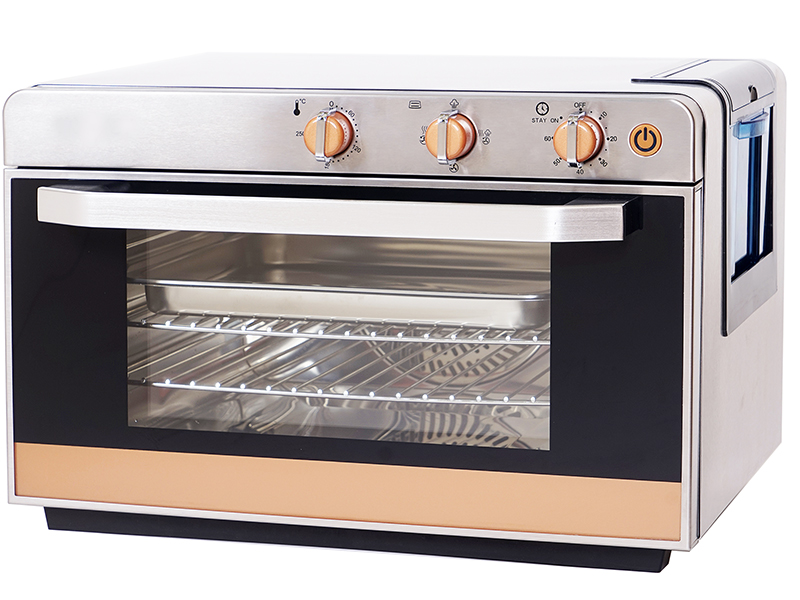
The table below outlines how these two cooking methods stack up across the factors that matter most in daily kitchen use.
Factor | Convection Cooking | Steam Cooking |
|---|---|---|
Heat method | Circulated hot air | Injected steam/vapor |
Best for | Roasting, baking, browning | Vegetables, fish, reheating |
Texture result | Crisp, golden exterior | Moist, tender interior |
Nutrient retention | Moderate | High |
Cooking speed | Fast, even heat distribution | Gentle, consistent moisture |
Ideal kitchen type | Bakeries, commercial kitchens | Health-focused or fine-dining kitchens |
As the comparison shows, neither method covers every scenario equally well. Many professional kitchens in Europe now run both appliance types side by side, or choose combination units that switch between dry and moist heat depending on the dish.
Not every kitchen needs full-size commercial equipment. For smaller spaces, food trucks, cafes, or home kitchens with limited counter space, a compact option often makes more practical sense than a large convection or steam unit. A mini oven delivers many of the same even-heat benefits as a full-size convection model, just scaled down to fit tighter layouts without sacrificing daily performance.
This matters for anyone weighing cost and space against cooking capability. A smaller footprint doesn't have to mean smaller results, provided the unit still circulates heat properly and holds temperature steadily under regular use.
The honest answer depends on your menu and volume. Choose dry-heat circulation if your kitchen produces baked goods, roasted meats, or crisp-finish dishes in high volume, since even browning and faster recovery time between batches matter most there. Choose moisture-based cooking if your priority is preserving texture and nutrients in vegetables, seafood, or reheated meals, particularly in health-conscious or fine-dining settings where presentation and freshness carry weight.
Kitchens that need both often invest in combination equipment or run separate units for each purpose. Kingpower manufactures across both categories, along with compact models for smaller operations, giving commercial buyers and OEM partners flexibility rather than forcing a single approach onto every kitchen layout. With a manufacturing footprint built specifically around European standards and expectations, the company designs equipment that holds up under the demands of daily commercial use rather than occasional home cooking.
There's no single winner in this comparison because the two technologies solve different problems. Dry heat circulation excels at speed, browning, and batch consistency. Moisture-based cooking excels at texture, nutrient retention, and gentle reheating. The smartest approach is matching the appliance to your actual cooking priorities rather than picking based on trend or price alone.
If your kitchen handles baked goods or roasted dishes at volume, prioritize even air circulation. If delicate textures and ingredient quality matter more than speed, prioritize steam. And if space is the real constraint, a compact unit can still deliver reliable, even-heat results without taking up a full equipment bay.
Can one oven do both jobs?
Some combination units blend dry heat and steam functions in a single chamber, though dedicated single-function units typically perform each task more consistently at commercial volume.
Which option costs less to run?
Dry-heat circulation generally uses less energy per cycle since it doesn't need to generate and maintain steam, though actual costs vary by model size and usage frequency.
Is steam cooking harder to learn?
Not significantly. Most steam units use preset programs for common dishes, so staff training time is comparable to learning a standard convection cycle.
What's the main risk of choosing the wrong type?
Picking dry heat for delicate, moisture-sensitive dishes can dry them out, while choosing steam for dishes that need crisp browning won't deliver the texture those recipes require.
